

Engineering Support Center
Platform-oriented RF engineering support for GNSS antenna selection, embedded integration, and co-site EMI troubleshooting.



Final positioning precision is never determined by datasheet specs alone. In real-world deployments, RTK fix stability and C/N0 tracking density are dictated by placement, chassis ground conditions, cable loss, and co-site telemetry interference. HelioNavi bridges this gap with an integration-first engineering approach.
Engineering Support Capabilities

Antenna Selection Optimization
Bespoke matching across Helix, Patch, Combo, or Smart form factors based on your airframe/chassis SWaP boundaries, target GNSS bands, and operating dynamics.

Receiver & Module Alignment
Comprehensive audit of LNA gain matching, noise figures, supply voltage tolerances, and out-of-band pre-filtering compatibility with your specific RTK engine.

Mechanical & Routing Guidance
Precision guidance on mounting orientation, chassis ground-plane leveraging, structural cable layout, and RF connector selection to avoid signal attenuation.

RTK Performance & Signal Audit
Deep-dive evaluation of cycle slips, carrier-phase degradation, and weak satellite tracking under severe structural occlusion or terrain-reflected multipath.

Co-Site EMI & Crosstalk Review
Isolating and mitigating broadband magnetic emissions and digital clock harmonics from high-power 4G/5G links, telemetry radios, ESCs, and CMOS cameras.

Bespoke Prototyping & Validation
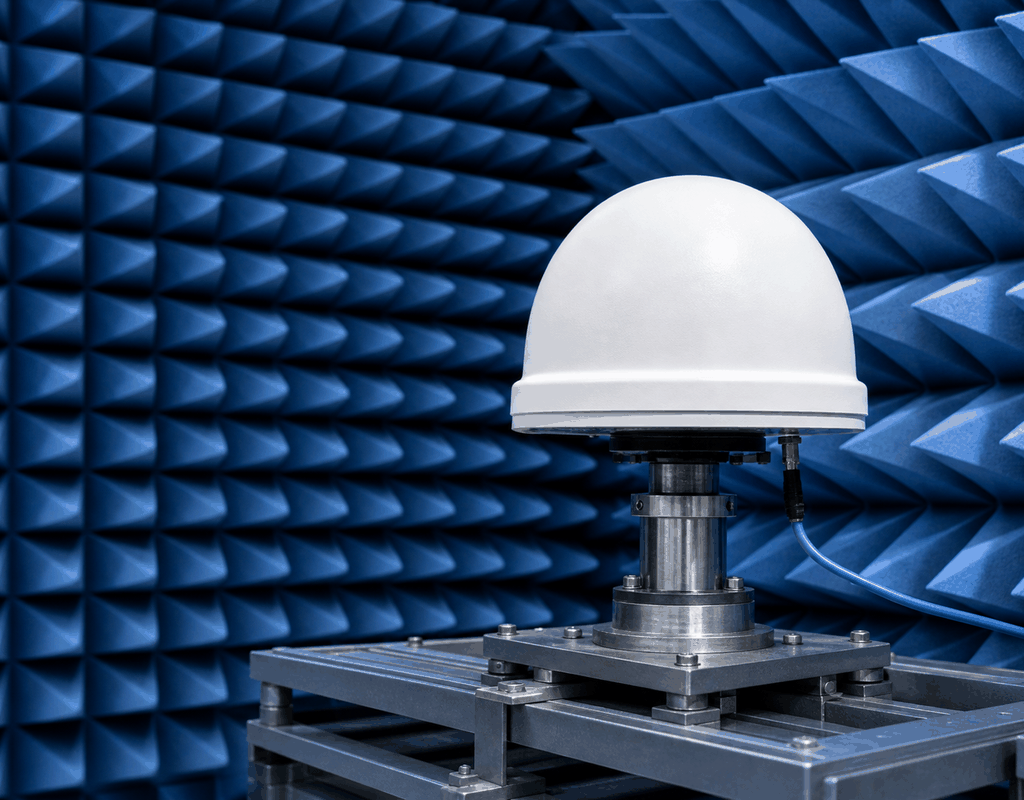
Technical feasibility review for fully tailored radomes, custom tail-lengths, and module-level integration backed by 3D anechoic chamber test pattern data.
Testing and Validation Support
We can support customers with RF test data review, S-parameter interpretation, radiation pattern review, axial ratio evaluation, C/N0 comparison, RTK performance feedback and platform-level validation suggestions.
Our goal is to help customers understand not only antenna specifications, but also how the antenna performs in the actual application environment.
Support Process
01
Share Your Requirement
Send us your platform type, application, GNSS receiver, required frequency bands, antenna installation conditions and current technical question.
02
Engineering Review
Our technical team reviews the information and identifies the most likely antenna, integration or platform-related factors.
03
Recommendation or Troubleshooting Guidance
We provide practical recommendations, such as antenna type selection, installation improvement, cable or connector suggestions, receiver matching advice or possible customization direction.
04
Follow-Up Support
For active projects, we can continue supporting prototype evaluation, platform integration, test feedback and product optimization.
Common GNSS Antenna Support Questions
Which GNSS antenna is better for my UAV: helix or patch?
It depends on your platform size, installation location, weight limit, required bands, RTK performance target and ground-plane condition. Helix antennas are often suitable for UAVs and dynamic platforms, while patch antennas are often preferred for low-profile and compact integrations.
Why is my RTK fix unstable?
Unstable RTK performance may be related to antenna placement, multipath, weak C/N0, poor ground plane, cable loss, receiver configuration, RF interference or platform vibration. We can help review your installation and antenna configuration.
Can GNSS, 4G, Wi-Fi and Bluetooth be integrated into one antenna system?
Yes. It requires careful antenna layout, isolation, filtering, cable design and mechanical integration. HelioNavi supports GNSS combo antenna solutions for connected UAVs, robots and smart platforms.
Can you support custom antenna dimensions or connectors?
Yes. We can support customization for antenna form factor, frequency bands, cable length, connector type, enclosure, mounting method, radome color and module integration depending on project requirements.
Can you help match the antenna with my GNSS module?
Yes. Please share the receiver or module model, antenna supply voltage, required gain range, connector type and target application. Our team can review compatibility and recommend a suitable antenna configuration.
Need Help Choosing the Right GNSS Antenna?
Our engineering experts are ready to help you select the right antenna and optimize performance for your platform and mission.